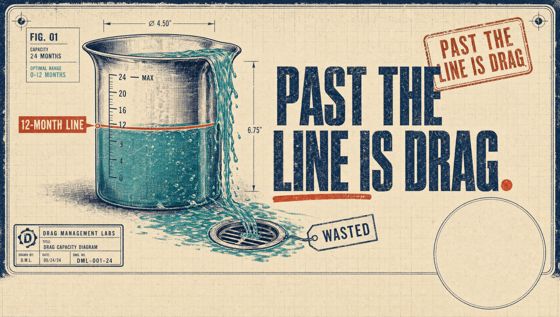
Your emergency fund has a finish line
The line is 12 months of your essential expenses: what it actually costs to keep your family's life running. Your salary and your income stay out of the sum.
Without that line, you stop far too early or you never stop at all.
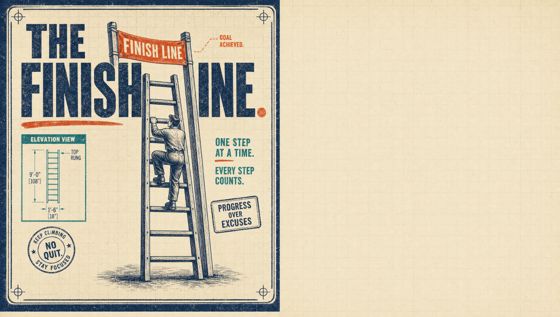
You don't have to reach it this year. You climb to it in 5 rungs, and something real changes at each one.
Rung 1: 1 month of essentials
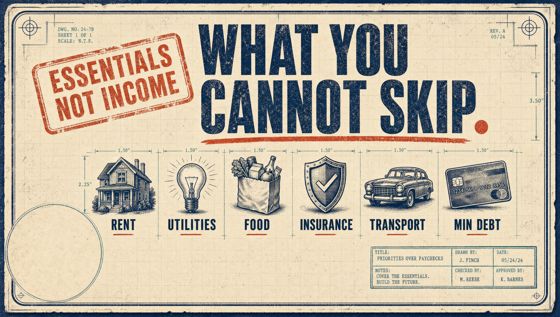
Start with 1 month of the things you can't skip:
- rent or mortgage
- utilities
- food
- insurance
- transport
- minimum debt payments
To find the number, pull 3 months of bank statements and mark every essential. Average the 3 months, then add 5% for the months that run hot.
As a worked example, a family spending $6,000 a month often lands near $3,800 of essentials. That's the base for every figure below, and it's the only number you have to calculate.
What changes the day you have it: the $200 surprise stops going on a card. The tyre, the school trip you forgot, the vet. They felt like emergencies only because there was nothing behind them.
1 month keeps you calm on a normal Tuesday. It's the rung almost everybody skips, because it feels too small to bother with.
Rung 2: 3 months
3 months of essentials is the number most of the internet gives you. It's a good floor.
3 months pays for a job search. Losing your job stops being the thing you can't say out loud, and you get to look for the right role instead of taking the first one.
On the $3,800 base, 3 months is about $11,400. Enough that a bad phone call stops being a countdown.
But 3 months is built for one thing going wrong in a calm year. A medical crisis, or 2 problems landing in the same quarter, can empty it. So treat 3 months as the floor and keep climbing.
Rung 3: 6 months
6 months is where your system stops being fragile.
At 3 months, one thing going wrong was survivable. At 6, the car and the boiler can break in the same month and the plan holds.
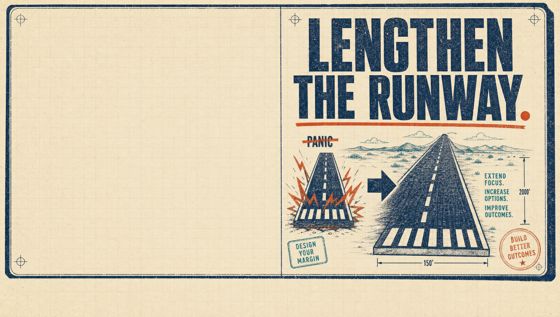
The change here is quieter than it sounds: you stop making decisions at speed. Panic is what happens when the runway is short. Lengthen the runway and the panic goes with it.
On the same base, 6 months is about $22,800. It's the first point where you stop checking the balance before you answer the phone.
Where people push back
You're thinking: 12 months of essentials is over $45,000, and I'm nowhere near it.
You're right, and most families aren't. That's exactly why the rungs matter more than the final number.
Very few families climb 12 months in a year, and that's fine. Your job is to know which rung you're on and take the next one. One rung at a time is progress that holds.
Rung 4: 12 months, your Real Number
12 months of essentials has a name: your Real Number.
3 months pays for a job search. A real recovery from a lost job, an illness or a move can take far longer, and 12 months gives you room to choose calmly.
At 12 months, the money you've built becomes a war chest. An emergency fund reacts after something breaks. A war chest lets you act before it does.
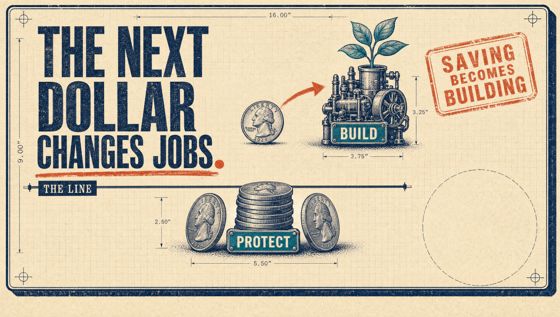
And here's the biggest change on the ladder: your next dollar changes jobs. Below the line, every dollar protects what you already have. Above it, there's nothing left to protect, so the next dollar goes to work.
On the same base, 12 months is about $45,600.
One condition before that switch, and it's firm. Toxic debt goes first. You don't invest around a debt that charges more than the market pays. Debt gone, net full, then the Growth Engine starts. That order is the whole design.
Why I trust a number over a feeling
Years ago I read Benjamin Graham's The Intelligent Investor, and one idea stayed with me: margin of safety.
You build a buffer because you can't predict the crash. That's why your Real Number is a number. A feeling never tells you when to stop. 12 months does.
Rung 5: above the line
Now, what happens when you go past 12 months and keep going.
Many parents do, because no one drew the line for them, so more always felt safer.
Above your Real Number, cash turns into drag. It loses a little to inflation and tax every year while it waits for an emergency that's already covered.
So the fifth change is the one the video is named after. The chase ends.
The overflow gets a new job in the Growth Engine, where time can work on it. That's what finishing looks like.
If your balance keeps climbing past the line every month, that's information. Your monthly transfer is set too high for a job that's already done. Lower it, and send the difference where it can grow.
What changes for you
Think back to the number you had in your head before reading this. It was probably a feeling with a currency sign in front of it.
Now it's a rung, with a figure under it and a next step after it.
Money stops being a monthly verdict on how you're doing. It becomes a position on a ladder you can see, and move up on purpose.
The families I've watched get this right knew when to stop.
Your step tonight
Work out 1 month of your essentials. Leave your income out of it. That single number tells you which rung you're on, and it takes about 20 minutes at the kitchen table.
To find the number properly, read Find your family's real emergency fund number. For why 3 months falls short, read How big your emergency fund really needs to be.
The rung figures use the $3,800 example: 1 month $3,800, 3 months $11,400, 6 months $22,800, 12 months $45,600. Education only, never financial advice.